
Old Favorites, New Home: How to Incorporate Existing Furniture into a Remodel
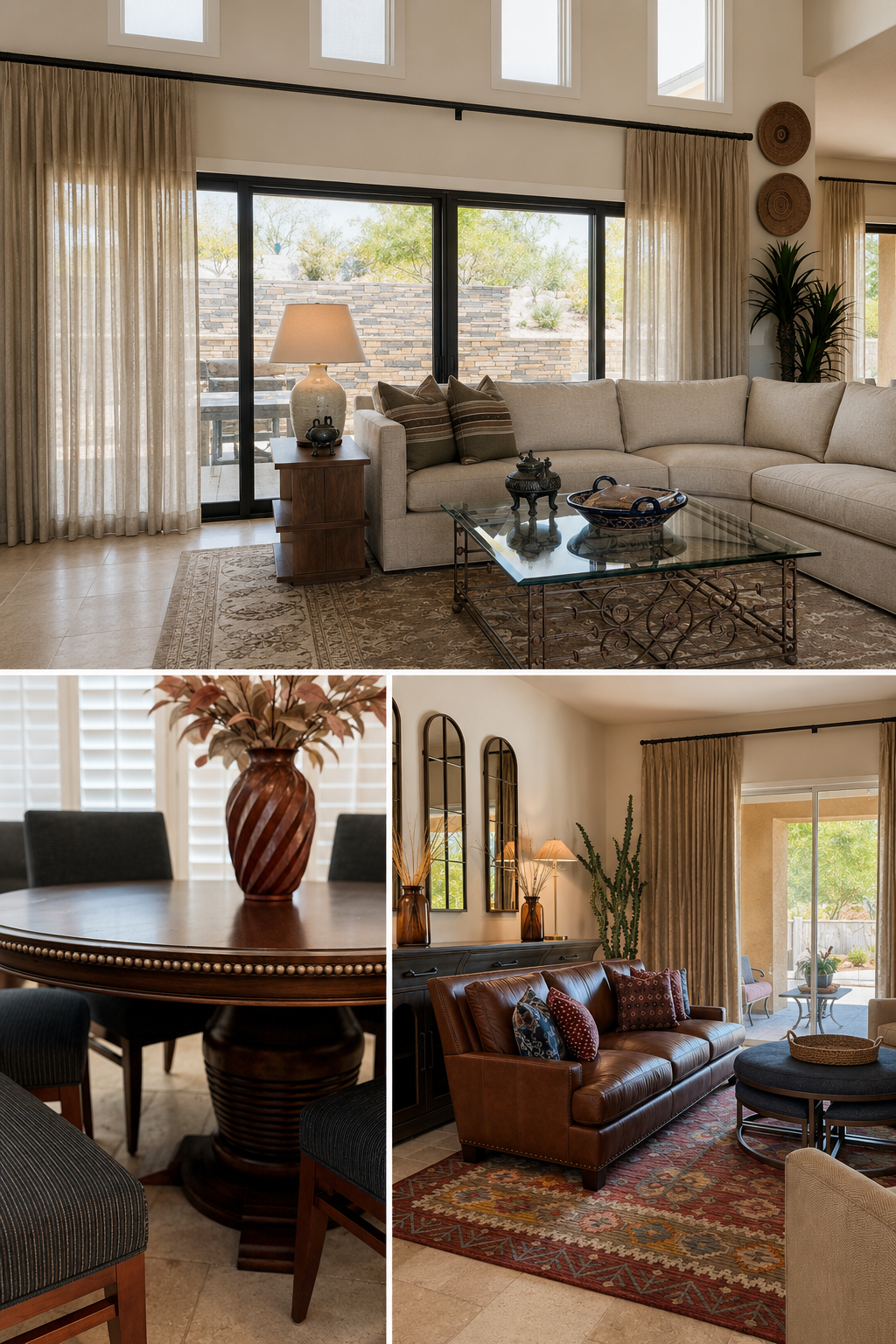
One of the questions we hear when beginning a remodel or designing a new home is, “Do I have to start over with all new furniture?”
Absolutely not.
In fact, some of the most interesting interiors are created by combining beautifully chosen new furnishings with pieces that already have a history.
You may have a favorite chair that is exceptionally comfortable, a dining table that has been part of your family for years, an antique chest inherited from a parent, or a well-made sofa whose fabric has simply seen better days. These pieces do not automatically become irrelevant because the architecture around them is changing.
The key is knowing what to keep, what to reinvent, and what to let go.
Start with the Pieces Worth Keeping
Before we specify new furniture, we look carefully at what a client already owns.
There is an important distinction between keeping something simply because you have it and keeping it because it contributes something meaningful to the new home.
A piece may deserve to stay because of its craftsmanship, comfort, sentimental value, provenance, or distinctive character. Sometimes it is simply a wonderful piece of furniture.
Other times, a client has lived with something for so long that it is difficult to see that it no longer works.
That editing process is an important part of interior design.
We evaluate the quality and condition of the piece, its dimensions, how it relates to the new architecture, and whether it supports the direction we are creating for the home.
The goal is not to find a place for everything. It is to identify the pieces worth designing around.
Reupholstery Can Completely Transform a Piece
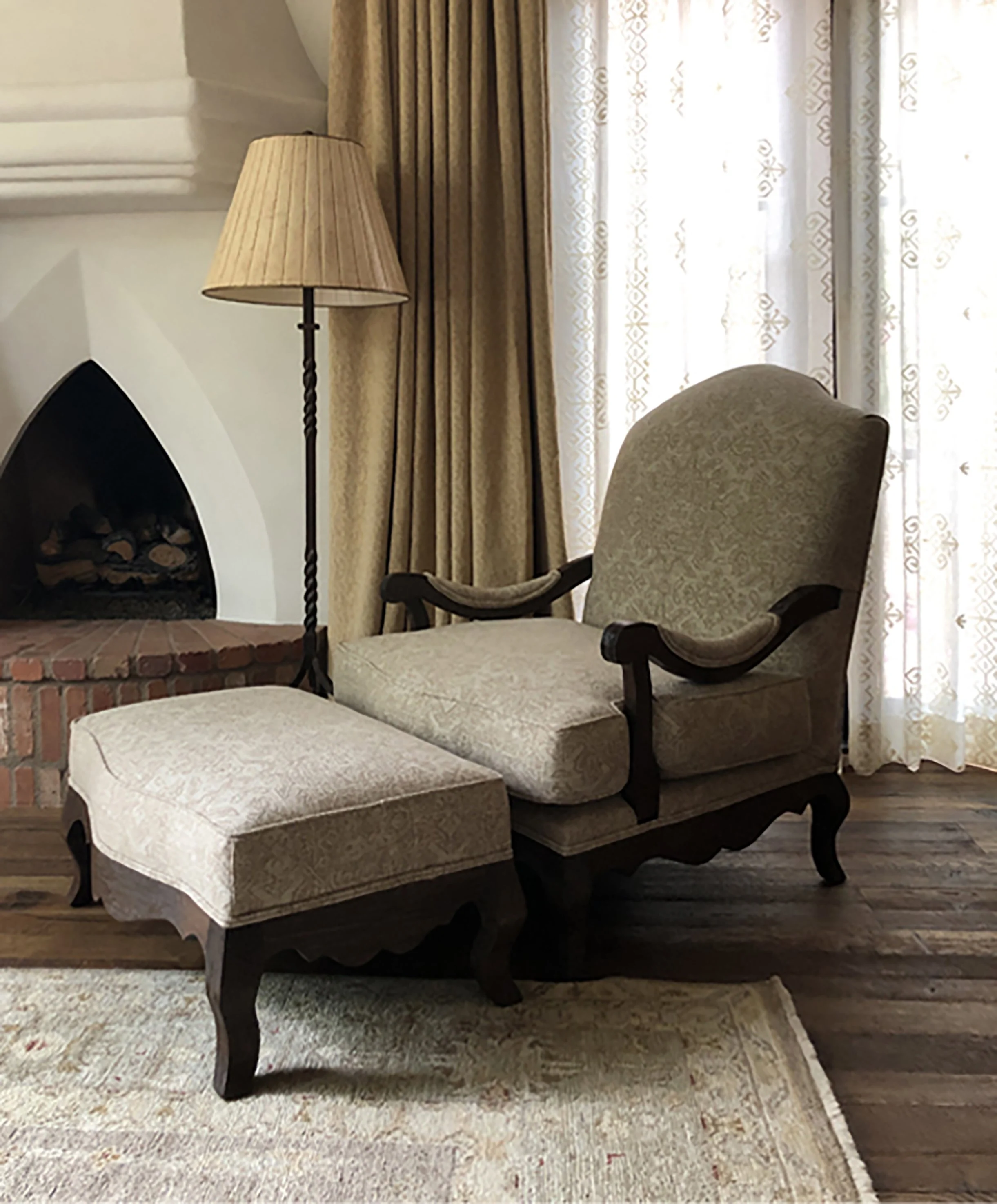
Reupholstery is one of our favorite ways to give existing furniture an entirely new life.
A beautifully constructed chair or sofa can look completely different in a new textile. Changing a dated pattern to a luxurious linen, bouclé, velvet, performance fabric, or subtle woven texture can immediately bring the piece into the new design.
And reupholstery can go well beyond changing the fabric.
Depending on the piece, an upholsterer may be able to replace cushions, adjust the fill, rebuild worn support, change the skirt, remove tufting, update decorative details, or modify the finish on exposed legs.
This is where it is important to look at the bones of the furniture rather than its current appearance.
An older chair covered in dated fabric may be hiding a beautiful silhouette and exceptional construction underneath.
That is often worth saving.
Know When Reupholstery Makes Sense
Not every upholstered piece is a candidate for reinvention.
Quality matters.
If the frame is poorly constructed, the proportions are wrong for the new room, or the cost of rebuilding the piece approaches or exceeds the cost of a better replacement, purchasing new may make more sense.
But with a well-made piece—particularly a distinctive, vintage, antique, custom, or sentimental one—reupholstery can be an excellent investment.
There is also something appealing about preserving a piece that already belongs to your story rather than replacing it simply because the room around it is new.
Wood Furniture Can Have a Second Life, Too
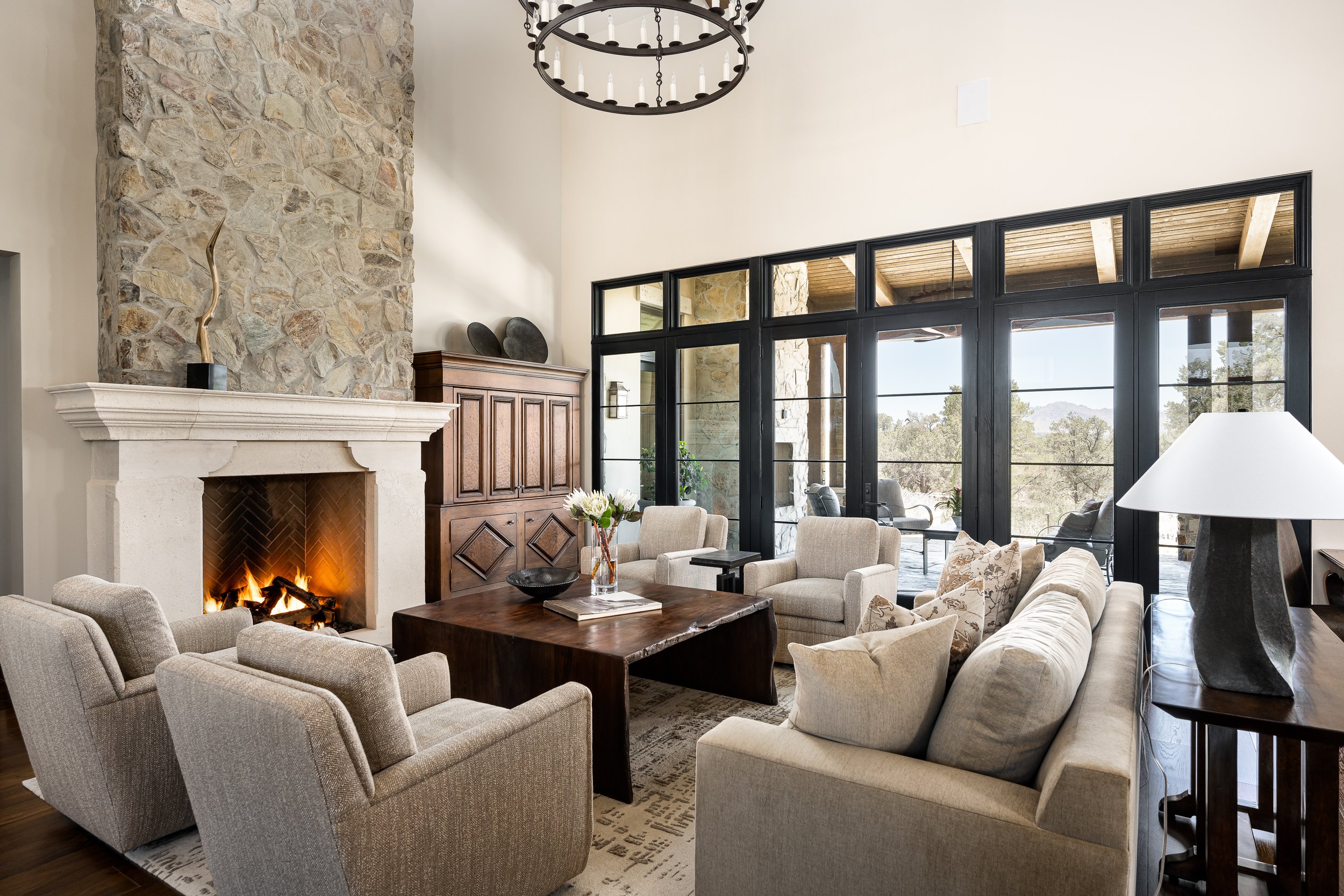
Upholstery is not the only thing we can change.
Wood furniture can often be refinished, stripped, stained, painted, repaired, or modified. Hardware can be replaced. A dated finish can sometimes be transformed into something quieter and more sophisticated.
A traditional chest in a reddish stain, for example, may feel completely different once the finish is reconsidered and it is placed against a more contemporary wall treatment with modern artwork above it.
Sometimes we do not change the furniture at all.
We simply change its context.
That juxtaposition between old and new can be exactly what makes a room interesting.
Scale Comes Before Sentiment
This is particularly important when moving into a new home.
Furniture that worked beautifully in one house may not work in another.
Ceiling heights, window locations, circulation paths, architectural focal points, and room proportions all affect how furniture feels in a space. A sectional that fit perfectly in your previous great room may interrupt the flow of the new one. A beloved dining table may be too small—or too large—for the new dining room.
This is why we measure existing furniture and incorporate the pieces under consideration into our space planning.
Before deciding that something will move into the new home, we want to know exactly where it will live and whether the scale is right.
Sentimental value matters. So does good space planning.
Mix Existing Pieces with New Ones
When clients keep existing furniture, we generally are not trying to recreate their previous home.
The goal is to see those pieces differently.
A traditional dining table might be paired with newly upholstered chairs and a contemporary chandelier. An antique chest might sit beneath modern artwork. A favorite lounge chair may receive new upholstery and be paired with a sculptural new side table.
This combination is often far more interesting than purchasing an entire room of furniture from one collection.
The home begins to feel layered rather than furnished all at once.
That is an important distinction.
Let One Special Piece Lead the Room
Occasionally, an existing piece is important enough that we design around it.
It may be a beautiful antique, an extraordinary rug, a piece of art, a grand piano, or furniture with significant family history.
Rather than treating that piece as a problem we need to “make work,” we can allow it to become part of the design concept from the beginning.
Its color, material, scale, or history may influence selections elsewhere in the room.
When handled thoughtfully, a piece from the past can become one of the most compelling elements in a completely redesigned interior.
Avoid the Matching Trap
One concern clients sometimes have is that their existing furniture will not “match” the new pieces.
It doesn't need to.
A sophisticated interior is not created by making every wood finish identical or selecting furniture from the same collection.
What matters is that the pieces relate to one another.
We look for connections in proportion, color, material, line, texture, and visual weight. There should be a conversation between the pieces without making everything look the same.
A darker antique can look beautiful in a room with lighter contemporary furnishings. A traditional chair can work alongside a clean-lined sofa. A vintage piece can provide exactly the character a newly remodeled space needs.
The tension between different periods and styles is often what gives a room personality.
A Remodel Should Still Feel Like Your Home
There is a temptation during a major remodel or new build to believe everything must be new.
But a beautiful home is not a showroom.
It should contain pieces that mean something to you.
When we thoughtfully combine existing furniture, reupholstered pieces, antiques, art, and personal collections with new custom furnishings, the result has a depth that is difficult to achieve when everything arrives at once.
The architecture may be new. The finishes may be new. Much of the furniture may be new.
But there should still be something familiar.
At Victoria King Design, our role is not simply to select new things. It is to look at the entire picture—what you own, what you love, how you live, and what your new home needs—and determine how those elements can come together beautifully.
Sometimes the perfect piece for your new home is one you already own.
Planning a remodel or new home in Scottsdale, Paradise Valley, Phoenix, Sedona, or Northern Arizona?
Before deciding what stays, what goes, and what needs to be purchased, Victoria King Design can help you develop a cohesive furnishing plan for the entire home. We evaluate existing pieces alongside the new architecture, identify opportunities for reupholstery and refinishing, and thoughtfully source new furnishings where they will make the greatest difference.
Schedule a design consultation with Victoria King Design to create a home that feels beautifully new—without losing the pieces that make it yours.